Table of Contents
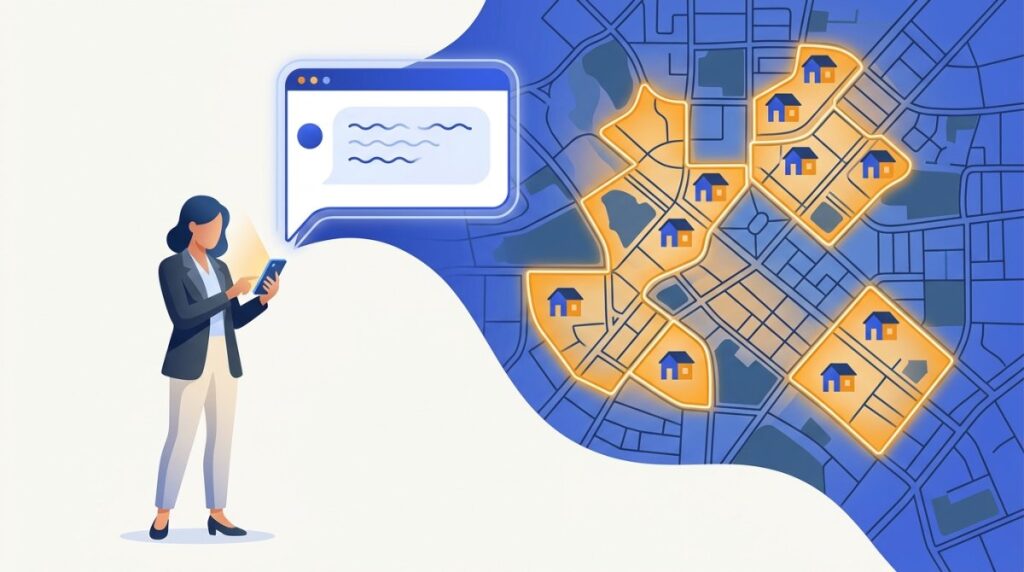
Buyers now ask ChatGPT, Perplexity and Google’s AI features which neighborhood suits them, which agency to trust and whether a new development is worth a viewing, and GEO for real estate is the work that makes your firm part of those answers. At AtalosWeb we have helped businesses build search visibility since 2017, and property is one of the sectors where the shift from search results to AI recommendations is most visible.
This guide explains what generative engine optimization means for real estate agencies, developers and buyer’s agents, which assets AI engines rely on, and where to start if you want your firm recommended rather than overlooked.
💡 Key Takeaways
- Publish data-rich area guides that answer the exact questions buyers ask AI about neighborhoods, prices, schools and commutes.
- Give every agent a consistent entity profile on your site and on trusted third-party platforms, with matching names, specialties and areas served.
- Mark up listings and developments with structured data so AI systems can read price, location, size and status without guessing.
- Track a prompt set per buyer type, local and international, and review how often your firm is mentioned against named competitors.
Why Property Buyers Now Ask AI Before Calling an Agent
Property buyers use AI assistants because a single conversation can replace hours of browsing portals, forums and agency websites. They ask long, specific questions such as “which areas are quiet but close to good schools”, “how does the buying process work for a foreign buyer” or “which agencies specialize in new-build apartments”, and they expect a shortlist in return.
That shortlist is the new first impression. If an AI answer names three agencies and yours is not one of them, the buyer may never reach your website. This matters most for international buyers, who often know nothing about a market and rely on AI to explain districts, taxes, legal steps and which professionals to contact.
Domestic buyers behave similarly at the research stage. They compare neighborhoods, sanity-check asking prices and ask whether a developer has a good track record. Every one of those questions is an opportunity for your firm to be the source the answer is built from.
What GEO for Real Estate Covers That Classic SEO Misses
GEO for real estate covers the signals AI engines use to choose and describe a firm, not just the signals that rank a page. Classic property SEO focuses on listing pages and local keywords; GEO adds entity clarity, quotable expert content and third-party proof that models can cite with confidence.
In practice, the work spans four layers. Technical access ensures AI crawlers can read your pages and listing data. Entity work makes sure models understand who your firm and your agents are, which areas you cover and what you specialize in. Content answers buyer questions directly. Off-site signals such as reviews, portal profiles, press coverage and community discussions confirm what your own site says.
Our AI SEO and GEO agency services page explains the full method. The sections below show how each layer applies specifically to agencies, developers and buyer’s agents.
🔍 From Our GEO Playbook
Split your prompt tracking by buyer type before you do anything else. A first-time local buyer, a relocating family and an overseas investor ask very different questions, and a firm can be visible for one group while invisible for another. Build ten prompts per group, run each several times, and note which competitors and which sources the AI engines cite. That map tells you where to invest first.
How to Build Area Guides AI Engines Actually Quote
Area guides get quoted when they answer buyer questions directly and specifically, in a format a model can lift into a response. A guide that opens with generic praise for a neighborhood gives AI nothing useful; a guide that states who the area suits, what property types dominate and how it compares with nearby districts gives it a ready-made answer.

Strong area guides for AI visibility usually share these elements:
- A one-paragraph summary at the top that states who the area is best for and why.
- Question-based subheadings that mirror real prompts, such as “Is this area good for families?” or “How is the commute to the city center?”
- Verifiable facts with sources: transport links, schools, planned infrastructure and typical property types.
- Named local expertise, with the agent who wrote or reviewed the guide shown clearly, including their experience in that area.
- A regular update date, because stale price or infrastructure information undermines trust quickly.
Buying-process guides work the same way. Explain each step, the documents involved and the professionals a buyer will meet, and state clearly which steps differ for international buyers. These pages are often cited because few competitors write them with enough clarity.
How Agent Profiles and Reviews Shape AI Recommendations
AI engines recommend firms they can describe with confidence, and that confidence comes from consistent information across many sources. When your website, portal profiles, business listings and press mentions all say the same thing about your firm and your agents, models are more likely to name you and describe you accurately.
Start with agent entity profiles. Each agent page should state the person’s full name, role, languages spoken, areas covered, property specialties and professional credentials where relevant. Add Person and RealEstateAgent structured data, and link each profile to the agent’s presence on portals and professional networks so the connections are explicit.
Reviews are the second pillar. Buyers ask AI which agencies are reliable, and models draw on review platforms and discussion threads to answer. Ask satisfied clients to mention the specific service, area and property type in their reviews, respond to every review professionally, and keep your business listings complete. Our guide to local SEO essentials covers the listing basics that feed these signals.
Want to know how AI engines currently describe your firm and your agents? We can check it for you.
How Listing Data and Multilingual Pages Reach More Buyers
Listing data reaches AI answers when it is structured, crawlable and consistent with what appears on portals. Developers and agencies that publish clean, well-marked-up pages for each property or project make it easier for AI systems to answer factual questions about availability, size, location and completion status.

For new developments, create a dedicated project page rather than relying on a brochure PDF. State the developer, location, unit types, amenities, construction stage and expected handover in plain text, and support it with structured data. Keep a changelog of construction milestones so AI engines and buyers see an active, credible project.
Multilingual buyers ask AI in their own language, and answers often favor sources written in that language. If you serve international clients, translate your most important area guides, process guides and agent profiles properly, use hreflang correctly, and avoid thin machine translations. Our on-site SEO checklist covers the technical foundations that multilingual pages depend on.
🔍 From Our GEO Playbook
Check that your sold or withdrawn listings do not linger as live pages. When AI engines retrieve an outdated listing and present it as available, buyers lose trust in the firm, not the model. Redirect expired listings to the relevant area or project page, and keep one canonical page per development so price and status information never contradicts itself.
GEO Priorities for Agencies, Developers and Buyer’s Agents
Each type of real estate firm should prioritize the assets that match the questions its buyers ask AI. The table below summarizes where agencies, developers and buyer’s agents usually get the most value.
| Priority | Real estate agency | Developer | Buyer’s agent |
|---|---|---|---|
| Key buyer prompts | Best agency in an area, how to sell or buy | New projects in an area, developer reputation | Who represents buyers, how the process works |
| Core content | Area guides and market commentary | Project pages with milestones | Process guides and due diligence explainers |
| Entity focus | Firm plus individual agent profiles | Company and each named project | Firm and advisor expertise by buyer type |
| Structured data | RealEstateAgent, Person, listings | Organization, project and offer details | Organization, Person, services |
| Trust signals | Local reviews and portal profiles | Completed projects and press coverage | Client testimonials and independent mentions |
| Multilingual need | Depends on buyer mix | Often high for international sales | Usually high for overseas clients |

Whichever column fits you, the starting point is the same: a baseline audit of how AI engines describe your firm today, a prompt set for each buyer group and a prioritized roadmap. If you are comparing partners for this work, our guide on how to choose a GEO agency lists the questions to ask, and our overview of AI SEO services explains what a complete scope should include.
Measure progress with prompt-level visibility, the accuracy of how AI describes your firm, and AI referral traffic in your analytics connected to enquiries. Rankings alone will not show whether buyers are hearing your name in AI conversations.
🔍 From Our GEO Playbook
Ask your agents to log the questions buyers raise in the first call for a month. Those questions, in the buyer’s own words, are the best source for new content and new tracked prompts. They reveal the worries AI assistants are already being asked about, such as hidden costs, legal steps or neighborhood safety, long before they show up in keyword tools.
Ready to plan GEO for your agency, development or buyer’s agency? Send us your brief and target markets.

Frequently Asked Questions
What is GEO for real estate?
GEO for real estate is the practice of making a property firm visible and accurately described inside AI-generated answers. It covers technical access, entity profiles for the firm and its agents, quotable content such as area and process guides, structured listing data and third-party trust signals. The goal is for AI assistants to mention or recommend your firm when buyers ask about areas, agencies or developments. It complements traditional property SEO rather than replacing it.
Can a real estate agency get recommended by ChatGPT?
Yes, agencies do appear in ChatGPT answers, but no one can guarantee a specific recommendation. The model’s response depends on the prompt, the user and the sources it can access. What an agency can control is the quality and consistency of the signals it provides: clear profiles, strong reviews, useful guides and accurate listing data. Improving those signals raises the likelihood of being mentioned over time.
Do property developers need GEO for new projects?
Developers benefit because buyers increasingly ask AI about new projects in a specific area and about a developer’s reputation. A dedicated, crawlable project page with structured details gives AI systems something reliable to cite. Press coverage, completed-project references and reviews strengthen the developer as an entity. Without these, answers may rely on outdated or third-party descriptions instead.
Which structured data helps real estate websites in AI search?
Useful schema types include Organization, RealEstateAgent and Person for firms and agents, plus listing-level markup that describes the property, its location and its offer details. The markup should match the visible content on the page exactly. Structured data does not guarantee AI citations, but it reduces ambiguity about who you are and what you offer. It works best combined with clear on-page text.
How do international buyers use AI to find property?
International buyers often use AI assistants to learn about unfamiliar markets, compare neighborhoods and understand legal and tax steps. They frequently ask in their own language and request lists of agencies or advisors who work with foreign clients. Firms with translated guides, multilingual agent profiles and clear explanations of the buying process are better placed to appear. Reviews from past international clients add further credibility.