Table of Contents
If a proposal for AI SEO services cannot tell you exactly what will be delivered each month, it is selling a label rather than a scope. Real AI SEO work has seven concrete components, from a baseline visibility audit to reporting that connects AI answers to leads, and each one should produce something you can see, check and keep.
At AtalosWeb we have been scoping search work for companies in Europe, the US and Australia since 2017, and AI search has made one thing clearer than ever: vague deliverables hide weak work. Below is the scope we believe every buyer should expect, what each part produces, and the buzzwords you can safely ignore.
💡 Key Takeaways
- Expect a baseline AI visibility audit across several platforms before any content is written.
- Confirm that AI crawlers can reach your key pages and that your robots rules reflect a deliberate choice.
- Ask for off-site mention building in writing, because AI answers lean on third-party sources as much as your site.
- Require GA4 tracking of AI referral traffic so visibility can be tied to enquiries and sales.

What Are AI SEO Services and What Should They Deliver?
AI SEO services are the work needed to make your brand visible, accurately described and recommended inside AI-generated answers from tools such as ChatGPT, Google AI Overviews and AI Mode, Perplexity, Gemini and Copilot. They should deliver measurable changes in how often and how well those systems mention you, not just more content.
The term overlaps with GEO, AEO and LLM optimization, and in practice the scope is the same: technical access, entity clarity, quotable content, third-party signals and measurement. What separates a real service from a rebranded one is whether each of those areas has named deliverables. You can see how these workstreams fit together on our AI SEO and GEO agency services page.

The Core Scope: Seven Components of Real AI SEO Work

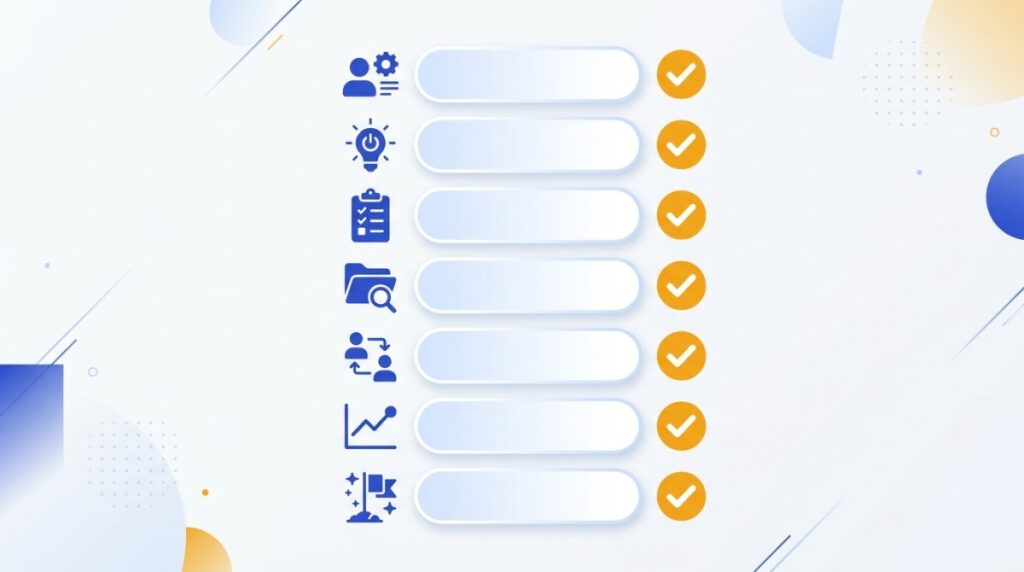
A real AI SEO scope contains seven components, each with its own output. If a proposal is missing one, ask why; sometimes there is a good reason, but often it signals a gap.
AI visibility audit: The audit sets the baseline. It tests an agreed prompt set across several AI platforms, records whether your brand is mentioned, cited or recommended, benchmarks you against named competitors and lists the sources the engines relied on. Because answers vary between runs, each prompt should be sampled more than once.
AI crawler access and technical health: This covers whether AI systems can actually read your site. It includes reviewing robots rules for crawlers such as OAI-SearchBot, GPTBot, PerplexityBot and ClaudeBot, checking that key content renders without relying on heavy scripts, and fixing the usual technical issues from our on-site SEO checklist. Google’s AI features draw on the same crawling as Google Search, so standard technical SEO still matters.
Entity and structured data work: Entity work makes it unambiguous who you are and what you do. It includes Organization, Service, Product and Person structured data where relevant, consistent company descriptions across your site and profiles, and cleanup of outdated or conflicting listings.
Answer-first content: Content is rewritten or created so AI engines can quote it. That means direct answers in the opening lines, clear definitions, comparison and “best for” formats, named expert authors and evidence such as specifications, processes or original frameworks.
Off-site mentions: Off-site work earns accurate mentions in the places AI engines trust: review platforms, directories, trade media, comparison articles and communities. It is often the slowest part of the scope and the part cheaper offers leave out.
AI referral analytics: Analytics separates visits from AI assistants in GA4, typically through a custom channel group or segment, and connects them to conversions so visibility can be judged by business outcomes.
Reporting: Reporting brings it together: prompt-level visibility, share of voice against competitors, cited sources, sentiment of mentions, AI referral sessions and the work completed that month.
🔍 From Our GEO Playbook
When we run an AI visibility audit, we always record which third-party pages the engines cite for each prompt, not just whether our client appears. That list of cited sources becomes the off-site plan. If a particular directory or trade article keeps being quoted for your category, being accurately listed there is usually worth more than another blog post on your own site.
How Each Component Should Show Up in Your Deliverables
Each component should appear as a named, checkable deliverable in your proposal and monthly reports. The table below shows what to expect from each part of the scope and how to verify that it is really being done.
| Component | What it includes | What you should receive | How to check it is real |
|---|---|---|---|
| AI visibility audit | Prompt set tested across several AI platforms vs competitors | Baseline report with cited sources and priorities | Prompts are listed and re-tested on a schedule |
| AI crawler access | Robots rules, rendering checks, technical fixes | Access review and a fix list | Key pages are reachable and render without heavy scripts |
| Entity and structured data | Schema, consistent descriptions, profile cleanup | Implemented markup and an entity consistency log | Validated markup and aligned descriptions across the web |
| Answer-first content | New and refreshed pages built to be quoted | Content briefs and published pages | Direct answers early, named authors, clear evidence |
| Off-site mentions | Reviews, directories, trade media, communities | Outreach plan and a log of earned mentions | Mentions appear in sources the engines actually cite |
| AI referral analytics | GA4 channel grouping and conversion tracking | Working segments and dashboards | AI assistant visits visible alongside leads |
| Reporting | Prompt tracking, share of voice, sentiment | Monthly report with actions taken | Prompt-level results, not only keyword rankings |
Want to know where your company stands before you compare scopes? We can run the baseline for you.
What Is Not Included, and Which Buzzwords to Ignore
A real AI SEO scope does not include guarantees of specific placements, and it does not rely on shortcuts. AI answers depend on models, users and sources no agency controls, so any promise of a fixed position inside ChatGPT or Google’s AI features should be treated as a warning sign.
Be cautious with these common buzzwords:
- “Ranking #1 in ChatGPT.” AI answers do not have stable positions the way search results do.
- “Proprietary AI algorithm.” If the method cannot be explained, it cannot be evaluated.
- “Hundreds of AI-optimized articles.” Volume without expertise rarely earns citations.
- “Just add llms.txt.” Treat it as optional housekeeping, not a core lever, because its influence on AI answers has not been clearly established.
- “Prompt injection” or hidden text tricks. Manipulative tactics risk your reputation and can be ignored or penalized by the platforms.
For a deeper look at how to read proposals and costs, see our guide to GEO pricing and our comparison of a GEO agency vs a traditional SEO agency.
🔍 From Our GEO Playbook
Ask any vendor to show you the exact list of prompts it plans to track and the date each one was last tested. A real AI SEO service will have this ready, even at proposal stage. If the answer is a slide about algorithms, the scope has not been thought through, and the reporting you receive later will likely be screenshots rather than data.
How to Choose AI SEO Services That Fit Your Business
Choose AI SEO services by matching the scope to your gap, not by picking the longest list. If AI crawlers cannot reach your site, technical work comes first. If AI engines know you but describe you poorly, entity and content work matter most. If competitors dominate the sources AI engines cite, off-site work should carry more weight.
Start with an audit, agree on a prompt set tied to your real buying questions, and ask for a phased plan with clear checkpoints. Make sure you own all content, data, markup and analytics setups created for you, and that reporting shows prompt-level results from the first month.
🔍 From Our GEO Playbook
Before signing, ask your sales team for the questions prospects ask most often in first calls. Those questions are usually the same ones buyers type into AI assistants. Building the prompt set from real sales conversations keeps the scope focused on revenue, and it gives you an easy way to judge whether the content being produced actually answers what buyers care about.
Ready for a scope with every deliverable named and every result measured? Tell us about your company and markets.

Frequently Asked Questions
What is the difference between AI SEO services and traditional SEO?
Traditional SEO focuses on ranking pages in search results and earning clicks. AI SEO services focus on getting your brand mentioned, cited and recommended inside AI-generated answers. The two share foundations such as technical health and quality content, but AI SEO adds prompt-level tracking, entity work and a stronger emphasis on off-site sources. Most companies benefit from running both together.
Do AI SEO services include content writing?
Yes, but the content has a specific purpose. It should answer buyer questions directly in the opening lines, use clear structure and named expert authors, and include evidence AI engines can quote. Refreshing existing cornerstone pages is often as important as creating new ones. A scope that is mostly high-volume generic writing is unlikely to earn citations.
How do you measure the results of AI SEO services?
Results are measured through repeated testing of an agreed prompt set across AI platforms, tracking how often your brand is mentioned or cited and how that compares with competitors. Reports should also show which sources the engines cite and the sentiment of mentions. In GA4, visits from AI assistants can be separated and connected to conversions. Together these show both visibility and business impact.
Should AI crawlers be allowed on my website?
For most businesses that want visibility in AI answers, allowing the crawlers used for AI search is sensible, because blocked pages cannot be read or cited. Some companies choose to block crawlers used mainly for model training while allowing search-related ones. The key is making a deliberate decision rather than inheriting default rules. Your agency should explain the trade-offs for each crawler.
How soon should AI SEO services show progress?
Technical and entity fixes can be picked up relatively quickly by platforms that search the live web. Changes that depend on new content being indexed, third-party mentions accumulating and model updates usually take longer. A good provider will set checkpoints and show prompt-level movement over time. Be wary of anyone promising a fixed date for specific placements.