Table of Contents
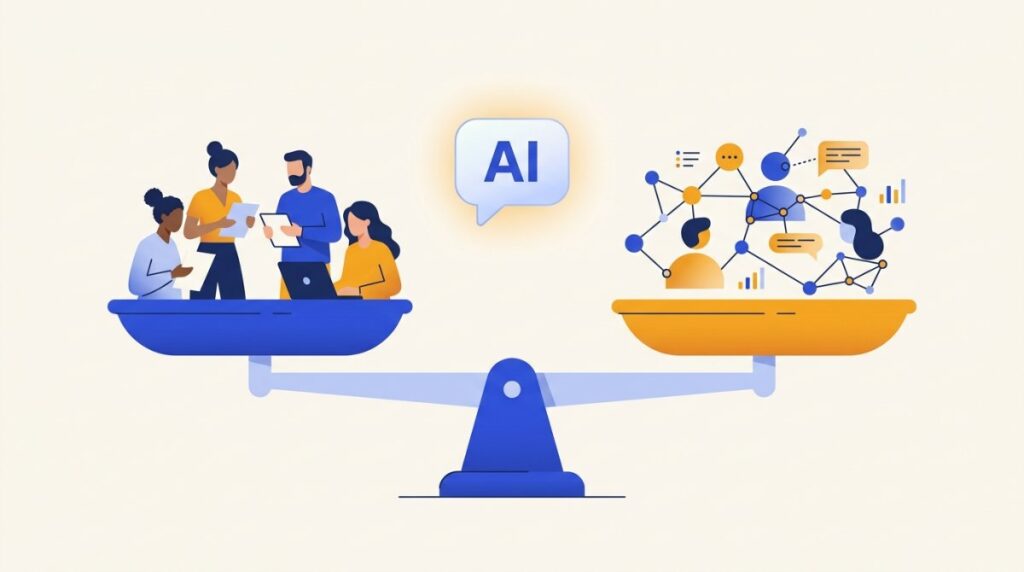
Whether you build GEO in-house or hire a generative engine optimization agency comes down to four things: the skills you already have, how fast you need results, how much control you want, and whether your cost base can carry a specialist team. At AtalosWeb we have run search programs for companies since 2017, and we regularly see both models succeed, and fail, for predictable reasons.
This article sets out the skills and tools GEO requires, compares in-house, agency and hybrid setups side by side, and gives you a decision framework you can apply to your own situation.
💡 Key Takeaways
- Map the five core GEO skills against your current team before comparing any costs.
- Keep subject-matter expertise and approvals in-house under every model, because no outside partner can replace them.
- Use an agency where speed, tooling and cross-market pattern recognition matter more than day-to-day control.
- If you choose a hybrid, write down who owns each workstream and each report from day one.
What GEO Work Involves Before You Decide Who Does It
GEO work involves making your brand visible, accurate and recommended inside AI-generated answers from tools such as ChatGPT, Google AI Overviews, Perplexity, Gemini and Copilot. It spans technical access, entity clarity, answer-ready content, off-site signals and measurement, and each of those needs ongoing attention rather than a one-off project.
That breadth is why the in-house versus agency question matters. A single marketer can handle parts of it, but few people are strong in technical SEO, content, digital PR and analytics at the same time. Before choosing a model, list the work in your scope. Our generative engine optimization agency page shows the full method we use, which you can treat as a checklist regardless of who delivers it.
Which Skills an In-House GEO Team Needs to Cover
An in-house GEO team needs to cover five skill areas, whether through dedicated hires or people who split their time. Gaps in any one of them tend to slow the whole program.
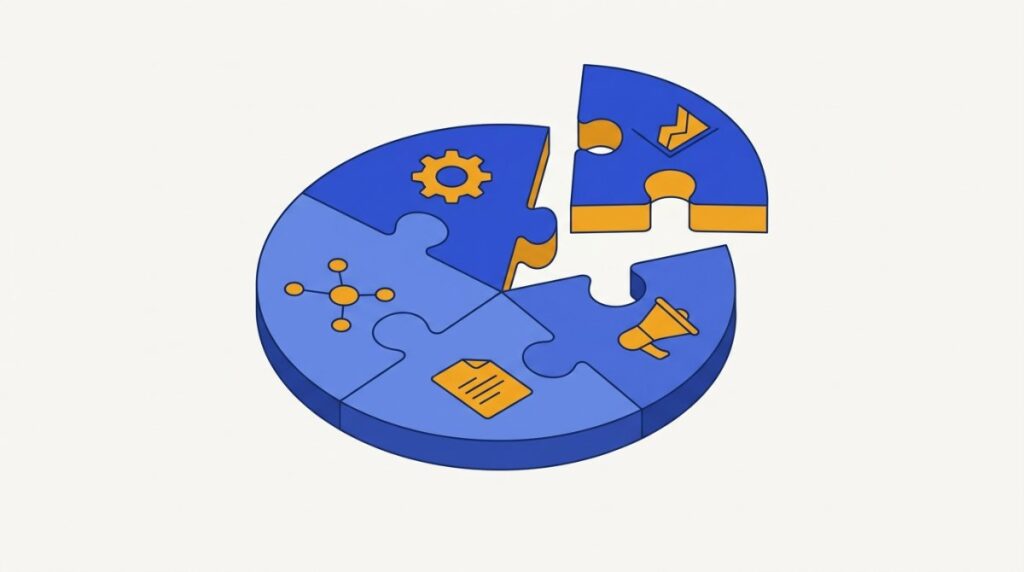
- Technical SEO: crawler access for search and AI bots, site structure, structured data and rendering issues.
- Entity and brand consistency: aligned company descriptions, profiles on trusted third-party sources and clear connections between your people, products and brand.
- Answer-first content: writing and editing that turns expert knowledge into direct, quotable passages, comparisons and guides.
- Digital PR and community presence: earning mentions in industry media, review platforms, directories and discussions that AI engines draw on.
- Measurement: prompt tracking with repeated sampling, AI referral segmentation in analytics and reporting that connects visibility to leads or sales.
Add to this the time to keep learning. AI platforms change how they retrieve and cite sources, and someone has to follow those changes and adjust the plan. For a small team, that learning overhead is often the hidden cost of doing GEO alone.
🔍 From Our GEO Playbook
Score your current team from one to five on each of the five skill areas, and be strict. Any area scoring two or below is a candidate for outside help; any area scoring four or above is one you can likely keep in-house. This simple exercise turns a vague debate about budgets into a concrete conversation about specific gaps and who should fill them.
Tooling, Speed and Control: Where In-House Teams Win
In-house teams win on control, context and speed of approval. They sit next to product, sales and legal, they know the brand voice, and they can publish a change the same day without a handover. For companies with complex products or strict compliance, that closeness is a real advantage.
Where in-house teams often struggle is tooling and breadth of view. Prompt tracking, AI visibility monitoring, crawl analysis and outreach tools each carry their own subscription and learning curve. An internal team also sees only its own brand, so it has fewer reference points for what works across different markets and AI platforms.
The cost structure differs too. In-house GEO is mostly a fixed cost: salaries, benefits, hiring time, training and tools, whether or not the program is at full speed. An agency retainer is a variable cost that can be scaled or paused, with tooling and training already absorbed. Our guide to GEO pricing explains how agency fees are typically structured.
Not sure where your current setup leaves gaps? Start with a clear picture of how AI engines see your brand today.
When a Generative Engine Optimization Agency Makes Sense
A generative engine optimization agency makes sense when you need several specialist skills at once, want to move faster than hiring allows, or lack the internal volume to justify full-time roles. It also helps when you want an outside benchmark of what competitors are doing across AI platforms.

Agencies are typically a strong fit for companies entering several markets or languages, businesses without an existing SEO team, and marketing teams that are strong on content but thin on technical or measurement skills. They are a weaker fit when every piece of content needs deep product knowledge that only internal experts hold and cannot easily share.
Choosing well matters more than choosing the model. Our checklist on how to choose a GEO agency lists the questions that separate a real GEO partner from an SEO provider with a new label, and our article on AI SEO company red flags covers the warning signs to watch for.
In-House vs Agency vs Hybrid: A GEO Decision Framework
The right model is the one that covers every skill area with the least friction for your organization. Score each criterion below for your own situation; the column that best matches your answers is usually the right starting point.
| Criterion | In-house | Agency | Hybrid |
|---|---|---|---|
| Skill coverage | Limited to the people you can hire | Broad specialist bench | Internal strengths plus external gaps filled |
| Speed to start | Slower, depends on hiring and training | Faster, team and process already exist | Fast for outsourced areas, gradual for internal ones |
| Tooling | Bought and learned separately | Included and already in use | Shared or split by workstream |
| Cost structure | Mostly fixed | Variable, scalable retainer | Mixed fixed and variable |
| Control and context | Highest | Depends on access and communication | High for core areas |
| Market perspective | Own brand only | Patterns seen across many sites | Both |
| Best for | Large teams with steady GEO volume | Teams needing speed and breadth | Teams with strong content but skill gaps |
🔍 From Our GEO Playbook
Whatever you choose, make sure prompt tracking data and tool accounts are registered to your company, not to an individual employee or to the agency. When a team member leaves or a contract ends, losing months of baseline data is one of the most common and most avoidable setbacks we see in GEO programs.
How to Make a Hybrid GEO Model Work in Practice
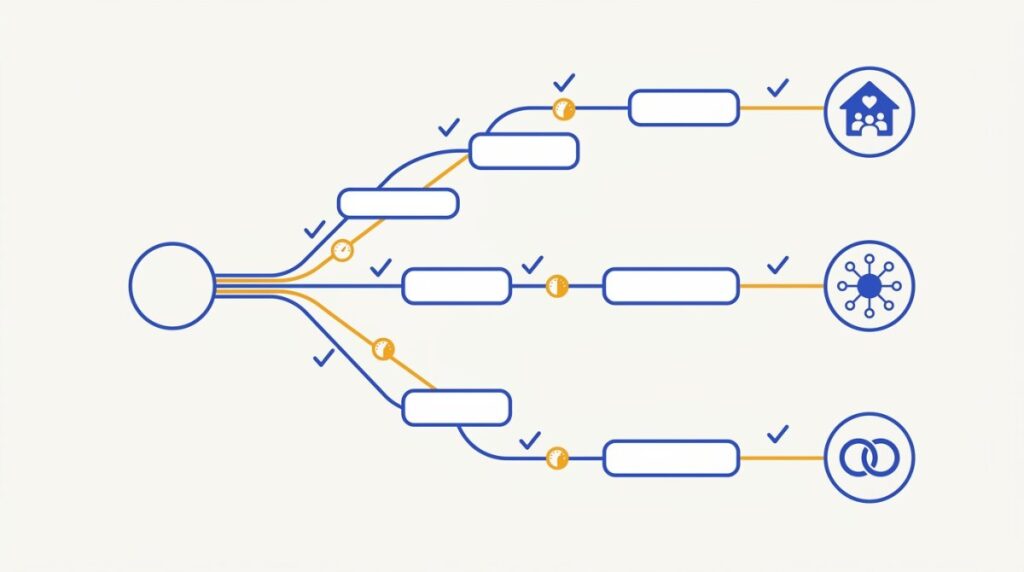
A hybrid GEO model works when ownership is explicit and both sides report against the same metrics. Without that clarity, hybrid setups drift into duplicated work or tasks that nobody finishes.
A common split keeps subject-matter content, approvals and brand voice in-house, while the agency handles technical audits, entity work, digital PR, prompt tracking and reporting. Another keeps content production with the agency and gives the internal team final review and publishing. Either can work if it is written down.
- Define owners for each workstream and each deliverable.
- Agree one prompt set and one reporting format used by both teams.
- Set approval windows so outside work is not left waiting for internal sign-off.
- Plan knowledge transfer, so internal skills grow over time.
🔍 From Our GEO Playbook
Book a recurring working session where your in-house experts talk through recent customer questions with the agency’s writers. Half an hour of real conversation usually produces more quotable, original material than a long written brief, and it keeps the content grounded in what your buyers actually ask rather than what a keyword tool suggests.
Weighing in-house, agency or hybrid for your GEO program? Share your team setup and goals, and we will outline a scope that fits.

Frequently Asked Questions
Is it cheaper to do GEO in-house or with an agency?
It depends on your volume of work and the skills you already have. In-house GEO is mostly a fixed cost made up of salaries, hiring, training and tools. An agency is a variable cost that already includes specialist skills and tooling. Companies with steady, high volumes of GEO work sometimes find in-house more efficient, while others get broader coverage for less commitment through an agency.
What does a generative engine optimization agency do?
A generative engine optimization agency works to get your brand mentioned, cited and recommended in AI-generated answers. Its work usually includes technical access checks, entity and brand consistency, answer-first content, digital PR and prompt-level measurement. A good agency also reports how visibility connects to leads or sales. It should be transparent that it cannot guarantee specific AI placements.
Can our existing SEO team handle GEO?
An existing SEO team can handle part of GEO, especially technical access and content structure. Most teams need to add entity work, digital PR, prompt tracking and AI referral measurement. The gap is usually in skills and tooling rather than effort. Many companies start by giving their SEO team outside support for the areas they have not covered before.
What is a hybrid GEO model?
A hybrid GEO model splits the work between an internal team and an outside agency. Typically, the internal team keeps subject-matter content, approvals and brand voice, while the agency handles specialist areas such as technical audits, digital PR and tracking. The model works when ownership of each workstream is written down. Both sides should report against the same prompt set and metrics.
When should we switch from an agency to in-house GEO?
Consider switching when your GEO workload is steady, your team has built the core skills and you can justify dedicated roles and tools. A gradual handover works better than an abrupt change. Keep baseline data, tool accounts and documentation in your company’s name so nothing is lost. Some companies keep a smaller agency role for specialist tasks after the switch.