Table of Contents
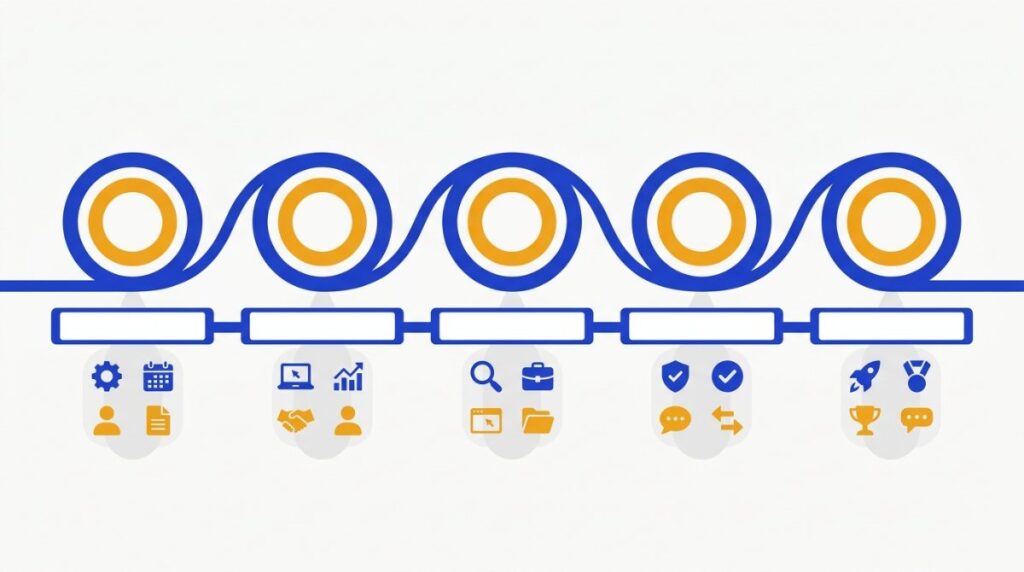
A typical retainer for generative engine optimization services moves in a clear sequence: audit and baseline first, then technical and entity foundations, then answer-first content, then off-site signals and ongoing iteration. At AtalosWeb, a digital marketing agency working with companies since 2017, we structure GEO this way because each stage depends on the one before it.
Below is what that structure usually looks like month by month, including what you as the client are asked to provide. Treat it as a typical pattern rather than a fixed promise: the pace always depends on your starting point, your market and how quickly changes can go live.
💡 Key Takeaways
- Agree the prompt set and competitor list in month one, because every later report is measured against them.
- Clear technical and entity blockers before scaling content, or new pages may not be read or attributed correctly.
- Reserve regular time with your subject-matter experts; their input is what makes content worth citing.
- Expect a monthly report with prompt-level results and a quarterly review that resets priorities.

What a GEO Retainer Covers and Why It Runs in Phases
A GEO retainer covers the ongoing work needed to get your brand mentioned, cited and recommended in AI answers from platforms such as ChatGPT, Google AI Overviews, Perplexity, Gemini and Copilot. It runs in phases because content built on a site AI crawlers cannot read, or for a brand AI engines cannot identify, is effort wasted.
The phases below overlap in practice. Technical fixes may continue into month three, and content planning often starts in month two. What matters is the order of priorities, not a rigid calendar. You can see how these phases fit into our wider method on our GEO services page, and our guide to GEO pricing explains how retainers are typically scoped.
Month 1: Audit, Prompt Set and Visibility Baseline
Month one establishes where you stand today and what success will be measured against. No meaningful optimization should start until this baseline exists, because without it nobody can say later whether anything improved.
- Prompt set: a list of buying-intent and research questions your customers ask AI, grouped by product, service or audience.
- Visibility baseline: repeated sampling of each prompt across the priority AI platforms, recording mentions, citations and named competitors.
- Technical access audit: checks that search and AI crawlers can reach and render your key pages.
- Analytics setup: AI referral segments in GA4 and conversion tracking tied to enquiries or sales.
- Roadmap: a prioritized plan for the following months.
What you provide: access to analytics, Search Console and your CMS, a list of main competitors, your priority products or services, and a short call with sales to capture the questions buyers ask most.
🔍 From Our GEO Playbook
Freeze the baseline prompt set for at least a full quarter. Adding new prompts is fine, but rewording the originals halfway through breaks the comparison and makes progress impossible to read. Keep a separate list for new prompts discovered along the way, and fold them into the core set only at the quarterly review.
Month 2: Technical Fixes and Entity Foundations
Month two removes the blockers that stop AI engines from reading or recognizing your brand. The work is less visible than content, but it determines how much value later content can deliver.

Typical tasks include fixing crawl and rendering issues, cleaning up robots rules that block AI crawlers you want to allow, adding or correcting structured data for your organization, people, products and services, and aligning your company description across your website, business profiles, directories and professional networks. Inconsistent descriptions make it harder for AI models to understand who you are.
What you provide: developer time or CMS access to implement fixes, approval of the official company description, and confirmation of the profiles and listings you own.
Want to see what a month-one baseline would reveal for your brand? We can run a snapshot first.
Month 3: Answer-First Content That AI Engines Can Quote
Month three focuses on content AI engines can lift directly into answers. That usually starts with rewriting existing high-value pages, then adds new content for important prompts where you have no strong page yet.
Effective GEO content opens each section with a direct answer, uses clear question-based headings, includes comparisons and tables where buyers weigh options, and shows named authorship and real expertise. Original insight, such as your own process, data or practical experience, gives AI engines a reason to cite you rather than a competitor repeating the same general points.
What you provide: time with subject-matter experts, review and approval of drafts, and any proprietary information you are comfortable publishing.
Months 4 to 6: Off-Site Signals and Iteration
Months four to six extend the work beyond your own website and start refining based on results. AI engines rely heavily on what other sources say about you, so this phase often shapes how you are described and recommended.

Off-site work typically includes digital PR in industry publications, review generation and management, complete profiles on relevant directories and platforms, and thoughtful participation in communities where your buyers ask questions. At the same time, the team re-tests the prompt set, identifies where competitors still win, and adjusts content and outreach accordingly.
What you provide: spokespeople for media opportunities, introductions to happy customers for reviews, and quick feedback on outreach angles.
🔍 From Our GEO Playbook
When a competitor keeps appearing for a prompt you want, look at the sources the AI engine cites alongside them. Those cited pages are your off-site shortlist: the publications, directories or comparison pages where your absence is costing you. Targeting them is far more effective than generic outreach to any site that will accept a guest post.
Reporting Cadence and What You Provide Each Month
Good GEO reporting runs on a monthly report and a quarterly review. The monthly report shows prompt-level visibility, cited sources, AI referral sessions and conversions; the quarterly review steps back to reset priorities, prompts and competitors.
| Phase | Main focus | Agency delivers | Client provides |
|---|---|---|---|
| Month 1 | Audit and baseline | Prompt set, visibility baseline, technical audit, roadmap | Tool access, competitor list, sales input |
| Month 2 | Technical and entity | Crawl fixes, structured data, aligned profiles | Developer time, approved company description |
| Month 3 | Answer-first content | Rewrites and new pages for priority prompts | Expert time, draft approvals |
| Months 4 to 6 | Off-site and iteration | Digital PR, reviews, directories, content refinements | Spokespeople, customer introductions |
| Ongoing | Reporting and planning | Monthly report, quarterly review | Feedback on business outcomes and priorities |
Ask for reports to include the prompts where visibility dropped, not just the wins, and a short note on what will change next month as a result. If you are still deciding whether to run this work internally or with a partner, our comparison of in-house vs agency for GEO can help.
🔍 From Our GEO Playbook
The single biggest factor in retainer pace is client response time. Nominate one internal owner who can approve drafts and technical changes within an agreed window. Programs with a clear decision-maker usually move through these phases far more smoothly than those where every change waits for a committee.
Want a month-by-month GEO plan tailored to your market and team? Tell us where you are starting from.

Frequently Asked Questions
What is included in generative engine optimization services?
Generative engine optimization services usually include a visibility baseline, prompt tracking, technical access fixes, entity and structured data work, answer-first content and off-site activity such as digital PR and reviews. They also include measurement of AI referral traffic and conversions. The exact scope depends on your starting point and goals. Ask any provider for a written list of monthly deliverables.
How long should a GEO retainer last?
GEO needs enough time for technical fixes, content and off-site signals to be picked up by AI platforms, so short one-off projects rarely show the full picture. Many programs are planned in quarters with a review at the end of each. The right length depends on your market and how fast changes can be implemented. A good provider will explain any minimum term rather than simply require it.
What does the client need to provide during a GEO retainer?
Clients typically provide access to analytics, Search Console and the CMS, plus a list of competitors and priority services. They also provide developer time for technical fixes, subject-matter experts for content and approvals within an agreed window. Later, spokespeople and customer introductions support digital PR and reviews. Slow client input is one of the most common causes of delay.
Can results be guaranteed in a GEO retainer?
No. AI answers depend on the platform, the model version, the user and the exact prompt, none of which an agency controls. What can be committed to is a clear process, specific deliverables and transparent reporting. Treat any guarantee of citations or recommendations as a warning sign. Honest providers set goals and checkpoints instead of promises.
How often should GEO results be reported?
Monthly reporting is a practical cadence for most GEO programs, with a deeper quarterly review. The monthly report should show prompt-level visibility, cited sources, AI referral traffic and conversions. The quarterly review is where priorities, prompts and competitors are reassessed. Reporting more often than monthly tends to show noise from answer variability rather than real trends.