Table of Contents
When a business owner asks an AI assistant to recommend an accountant, a management consultant or a financial advisor, the firms that appear are the ones with the clearest expertise signals, and GEO for professional services is the work of building those signals on purpose. It combines credible people, specialist service pages, trusted third-party listings and thought leadership that AI systems can quote.
Professional services are bought on trust, so AI assistants tend to lean on sources that demonstrate credentials, experience and reputation. At AtalosWeb we have helped businesses build search visibility since 2017, and in this guide we explain how accounting firms, consultancies and advisory practices can become the names AI engines recommend.
💡 Key Takeaways
- Publish a detailed bio page for every partner and senior advisor, with credentials, specialties and consistent details across LinkedIn and professional directories.
- Replace one generic “Services” page with specialist pages for each service, sector and client type you want to be recommended for.
- Keep your firm’s name, description and memberships identical across directories and professional body listings, because AI models cross-check them.
- Turn partner expertise into quotable thought leadership: clear definitions, practical checklists and original commentary that answer real client questions.

Why AI Assistants Now Shape Professional Services Buying
AI assistants now act as an early shortlist for many buyers of professional services. Instead of scanning ten search results, a founder or finance director can ask for “an accountant who specializes in software startups” and receive a short, reasoned answer.
That answer is built from what the model knows and what it can find: firm websites, directories, reviews, industry media and professional profiles. Generative engine optimization is the discipline of making sure those sources describe your firm accurately and convincingly. Our AI SEO and GEO agency services cover the full method; below we focus on what is specific to advisory firms.
For accountants, consultants and advisors, the stakes are high because the buying decision is personal. Prospects want to know who will advise them, not just which firm, and AI answers increasingly reflect that.
In practice, AI assistants recommend firms that show verifiable expertise, clear specialties and a consistent reputation across several sources. The signals that matter most fall into four groups:
- People: named partners and advisors with visible qualifications, experience and areas of focus.
- Specialties: pages that make it obvious which services, industries and client sizes you serve.
- Third-party validation: professional body listings, directories, reviews and media mentions.
- Published expertise: articles, guides and commentary that answer the questions clients actually ask.
Many firms already have these assets but keep them scattered or out of date. The first task is usually an audit of what AI systems currently say about the firm and which sources they cite when recommending competitors.
Partner and Author Bios as Entities AI Can Recognize
Partner and author bios should be treated as entities in their own right, not as short captions under a headshot. When AI models can connect a named expert to a firm, a specialty and consistent third-party profiles, they have stronger grounds to mention both.
A strong bio page includes the person’s full name and role, relevant qualifications and memberships, sectors and service areas, notable topics they write or speak about, and links to their professional profiles. Using Person schema on the page, connected to your Organization schema, helps machines read these relationships clearly.

Consistency matters as much as depth. The same name format, title and specialties should appear on your website, LinkedIn, speaker pages and any directory listings. Every article should carry a named, credentialed author whose bio page links back to their published work.
🔍 From Our GEO Playbook
Pick the three partners whose specialties match your most profitable services and treat their bios as priority landing pages. Add a short “questions I help clients with” section to each, written in the partner’s own words. Those plain-language questions often mirror the prompts buyers type into AI assistants, and they give models a clear link between the person and the problem.
Specialist Service Pages That Answer Buyer Prompts
Specialist service pages give AI assistants something precise to cite. A single page listing “tax, audit, advisory and consulting” rarely wins a recommendation for a specific prompt, while a focused page on a defined service for a defined client type often can.
Build pages around the combinations buyers actually ask about: service plus sector plus client type. Examples include outsourced finance for e-commerce brands, transaction advisory for founder-led businesses, or operational consulting for manufacturing companies. Each page should open with a direct answer to “who is this for and what do you do”, then cover scope, process, typical engagement structure and frequently asked questions.
Avoid making claims you cannot support, and keep regulated topics factual and general. If you serve B2B clients across several markets, our guide to AI search optimization for B2B companies explains how to structure content for longer buying cycles.
Curious how AI assistants currently describe your firm and your partners? We can run a quick check across the main platforms.
Directories, Professional Bodies and Thought Leadership
Directories, professional body listings and published thought leadership are the third-party sources AI assistants often rely on when recommending advisory firms. Your own website tells models what you claim; these sources help confirm it.
Start by listing every directory, membership register, industry association and awards page where your firm or partners appear. Check that each listing uses the same firm name, description, address and service categories, and correct anything outdated. Then identify reputable directories and associations in your field where competitors appear and you do not.
Thought leadership works when it is specific and quotable. AI engines favor content that defines a concept clearly, walks through a process, or offers an informed view on a change affecting clients. Commentary in industry publications, podcast appearances and conference talks all add further mentions that link your experts to their topics.
🔍 From Our GEO Playbook
When a regulation, standard or market condition changes, publish a short explainer from a named partner within days, covering what changed, who it affects and what clients should check. Then offer the same partner as a commentator to trade publications. Timely, attributed explanations are exactly the kind of content that AI assistants and journalists both reference.

Local vs International Service Areas: What Changes in GEO
Local and international service areas require different GEO signals. Local firms need strong location data, reviews and nearby-market pages, while international firms need clear statements of where and how they serve clients across borders.
| Factor | Local practice | International advisory firm |
|---|---|---|
| Typical buyer prompt | “Accountant near me for small businesses” | “Consultancy for expanding a software company into new markets” |
| Key entity data | Consistent name, address, phone and opening hours | Office locations, markets served, languages and cross-border experience |
| Priority sources | Business profiles, local directories, reviews | Industry directories, trade media, association listings |
| Service pages | Services by client type and nearby area | Services by market, sector and engagement type |
| Thought leadership | Practical guides for local business owners | Market analysis and cross-border insights |
| Proof signals | Client reviews and community involvement | Named experts, speaking roles and published commentary |
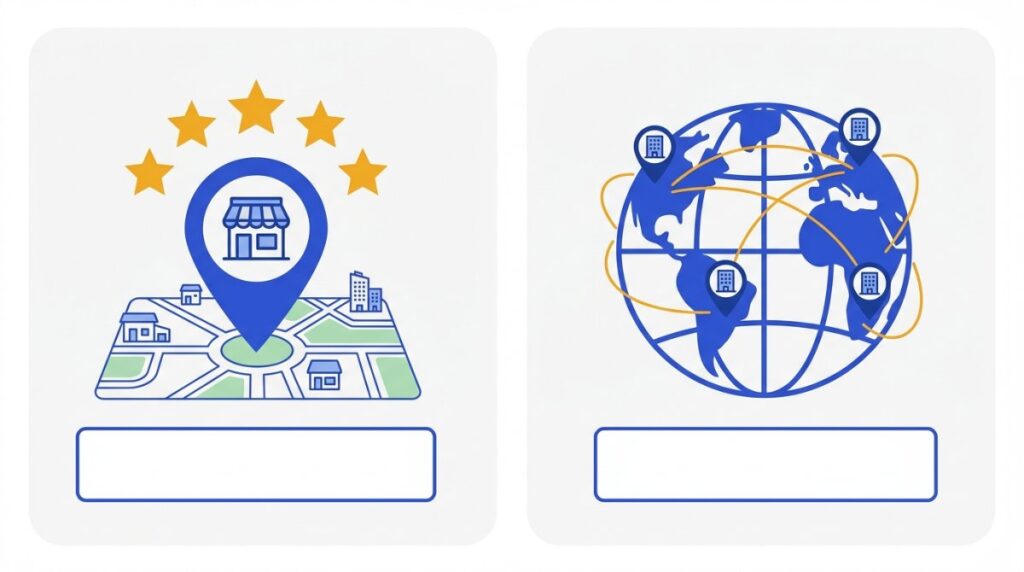
Many firms sit in both columns. A practice with one office may still advise clients in several countries, and an international firm still needs each office to be discoverable locally. Map your service areas honestly and create pages only where you can genuinely serve clients.
Once the strategy is clear, most firms follow a similar ramp-up. Our article on what to expect from an LLM SEO agency in the first 90 days shows how this work is usually sequenced.
Which GEO Priorities to Tackle First as an Advisory Firm
Start with the fixes that clarify who you are and who you serve: partner bios, specialist service pages and consistent directory data. These foundations make every later piece of content and outreach more effective.
A practical order for most accounting, consulting and advisory firms looks like this:
- Run a baseline check of the prompts your ideal clients would use and note which firms appear.
- Update partner and author bios, then link them to articles and external profiles.
- Build or rewrite specialist pages for your highest-value services and sectors.
- Clean up directory, association and business profile listings so details match.
- Launch a steady thought leadership rhythm led by named experts.
- Review results each month and adjust the prompt set as your services evolve.
🔍 From Our GEO Playbook
Ask your newest client how they found you and what they typed or asked along the way. Then ask two recent clients who chose a competitor first. Those conversations often reveal the exact phrasing buyers use, and that phrasing should shape your prompt set, service page headings and FAQ sections far more than a generic keyword list.
Ready to make your firm easier for AI assistants to recommend? Share your services and markets and we will prepare a tailored proposal.

Frequently Asked Questions
What is GEO for professional services?
GEO for professional services is the practice of making accounting, consulting and advisory firms more visible inside AI-generated answers. It focuses on expertise signals such as partner bios, specialist service pages, directory listings and thought leadership. The aim is for AI assistants to mention and recommend the firm when buyers ask for help. It builds on SEO rather than replacing it.
Do partner bios really affect AI recommendations?
Partner bios help AI systems connect named experts to your firm and to specific topics. When the same person appears consistently on your site, professional profiles and published articles, models have clearer evidence of expertise. Detailed bios also give buyers the reassurance they look for before contacting a firm. They are among the simplest improvements a firm can make.
Which directories matter most for accountants and consultants?
The most useful directories are the ones your buyers and your industry actually trust. That usually includes professional body registers, reputable industry directories, business profiles and review platforms relevant to your market. Check which sources AI assistants cite when recommending competitors, then prioritize those. Accuracy and consistency matter more than the number of listings.
Can thought leadership get our firm cited by AI?
It can improve your chances, especially when content is specific, well structured and written by a named expert. AI engines tend to reference pages that define concepts clearly or explain practical steps. Commentary in trusted third-party publications adds further weight. No one can guarantee citations, but useful expertise is one of the strongest signals available.
How long does GEO take for a professional services firm?
Timelines depend on your starting point, market and how quickly partners can review content. Foundational fixes such as bios, service pages and directory cleanup can often be done in the first few months. Building third-party mentions and a body of thought leadership takes longer and compounds over time. A staged plan with regular reviews is more realistic than a single deadline.