Table of Contents
An AEO agency and a GEO agency chase the same prize — being the answer, not just a link — but they grew out of different eras of search and still tend to put their effort in different places. At AtalosWeb we have worked on search visibility since 2017, from the first featured snippets to today’s AI-generated answers, and we see buyers get stuck on the labels far more often than on the work itself.
This guide explains where each term came from, where the two disciplines overlap, where their emphasis really differs, and how to judge any agency by its scope instead of its name.
💡 Key Takeaways
- Treat AEO as the discipline of winning direct answers (featured snippets, voice results, answer boxes) and GEO as the discipline of being cited and recommended inside generative AI answers.
- Ask every agency for a written prompt and query set that covers both classic answer boxes and AI assistant conversations in your category.
- Judge proposals on scope — technical access, entity work, answer-first content, off-site signals and measurement — not on the acronym in the headline.
- Reject any agency that cannot explain how it will measure visibility across both search results and AI platforms every month.

What AEO and GEO Mean and Where Each Term Came From
Answer engine optimization (AEO) is the practice of structuring content so search engines and assistants can lift it as a direct answer. Generative engine optimization (GEO) is the practice of making a brand visible, cited and recommended inside answers written by large language models.
AEO came into wide use when search results started answering questions directly: featured snippets, knowledge panels, “People Also Ask” boxes and spoken replies from voice assistants. The goal was to be the single extracted answer, usually a paragraph, list or table taken almost word for word from a page.
GEO is younger. The term was popularized by a 2023 research paper from Princeton University and IIT Delhi researchers, titled simply “GEO: Generative Engine Optimization”, which studied how content changes affect visibility in AI-generated responses. Since then it has become the common label for work aimed at ChatGPT, Google AI Overviews and AI Mode, Perplexity, Gemini and Copilot.
Both sit under the wider umbrella of search visibility, which is why our AI SEO and GEO agency services treat them as one connected program rather than two separate products.
Where an AEO Agency and a GEO Agency Overlap
The overlap is large: both disciplines reward clear, well-structured, trustworthy answers on pages that machines can easily crawl and understand. In practice, most of the foundational work an AEO agency does also helps GEO, and the reverse.
The shared foundation usually includes:
- Answer-first writing — a direct, definitive response in the first sentences under each heading.
- Structured data such as Organization, FAQPage, HowTo, Product or Article markup, where it genuinely fits the page.
- Technical access — fast, indexable pages with clean HTML that crawlers can parse without rendering heavy scripts.
- Topical depth — covering a subject thoroughly enough that your site becomes a reliable source for it.
- Authority signals — clear authorship, expertise, and a consistent brand description across the web.
If you want the detailed breakdown of what AEO work involves on its own, our guide to AEO services covers the deliverables one by one.
🔍 From Our GEO Playbook
Take your ten most important commercial questions and check two things for each: whether a featured snippet or answer box appears in search, and what ChatGPT and Perplexity say when asked the same question in natural language. When the two lists of sources barely match, you know that snippet-focused work alone will not carry over to AI answers, and the scope has to include GEO.
Where the Emphasis Differs: Snippets vs AI Citations
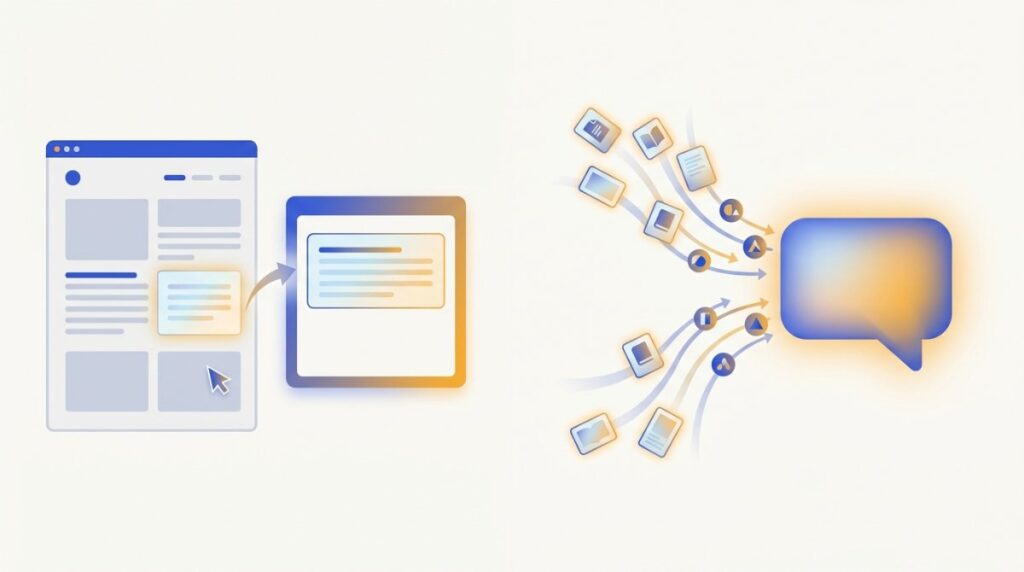
The real difference is where the answer comes from and how it is assembled. AEO optimizes for extraction of a single passage from a single page; GEO optimizes for inclusion in an answer synthesized from many sources, sometimes with no link at all.
What AEO work typically emphasizes
A classic AEO engagement focuses on query-level formatting: matching the question wording, keeping answers to a tight paragraph, using lists and tables that can be lifted cleanly, and targeting voice-style phrasing. Success is visible and binary — you hold the snippet or you do not.
What GEO work typically emphasizes
GEO leans harder on entity clarity and off-site evidence. Language models form a view of your brand from reviews, directories, industry media, comparison articles and community discussions, not only from your own pages. GEO also depends on prompt-level tracking, because AI answers vary between runs, users and model versions, so visibility is measured as a share over repeated samples rather than a single position.
Why the Agency Label Matters Less Than the Scope
The label on an agency’s website tells you almost nothing about what it will actually do. Many firms now use AEO, GEO, LLM SEO and AI SEO interchangeably, and some have simply renamed an existing SEO package.

What matters is whether the proposal covers the full chain that leads to being quoted: crawlable pages, an unambiguous brand entity, content built to answer real buyer questions, third-party presence and honest measurement. An “AEO agency” that includes all five is doing GEO in practice; a “GEO agency” that only rewrites blog posts is not.
We see the same confusion between GEO and traditional SEO, which we unpack in GEO agency vs SEO agency. The pattern is identical: ask for deliverables, not definitions.
Curious whether your brand is showing up in answer boxes, AI answers, both or neither? We will run a quick check across your core questions.
AEO Agency vs GEO Agency: Side-by-Side Comparison
Use this table to see how the two typical emphases compare. Most strong agencies today combine both columns rather than choosing one.
| Dimension | Typical AEO agency focus | Typical GEO agency focus |
|---|---|---|
| Primary target | Featured snippets, answer boxes, voice replies | Mentions, citations and recommendations in AI answers |
| Answer source | One extracted passage from one page | A synthesized answer drawn from many sources |
| Content format | Tight Q&A blocks, lists, tables | Answer-first pages plus original data, comparisons and expert views |
| Off-site work | Limited, mostly on-page | Reviews, directories, media, communities and partner mentions |
| Entity work | Schema and knowledge panel basics | Consistent brand descriptions across the web and in structured data |
| Measurement | Snippet ownership and search visibility | Repeated prompt sampling, share of voice, AI referral traffic |
| Main risk | Winning snippets that AI assistants ignore | Chasing AI mentions without a search foundation |
How to Evaluate an AEO or GEO Agency Before You Sign
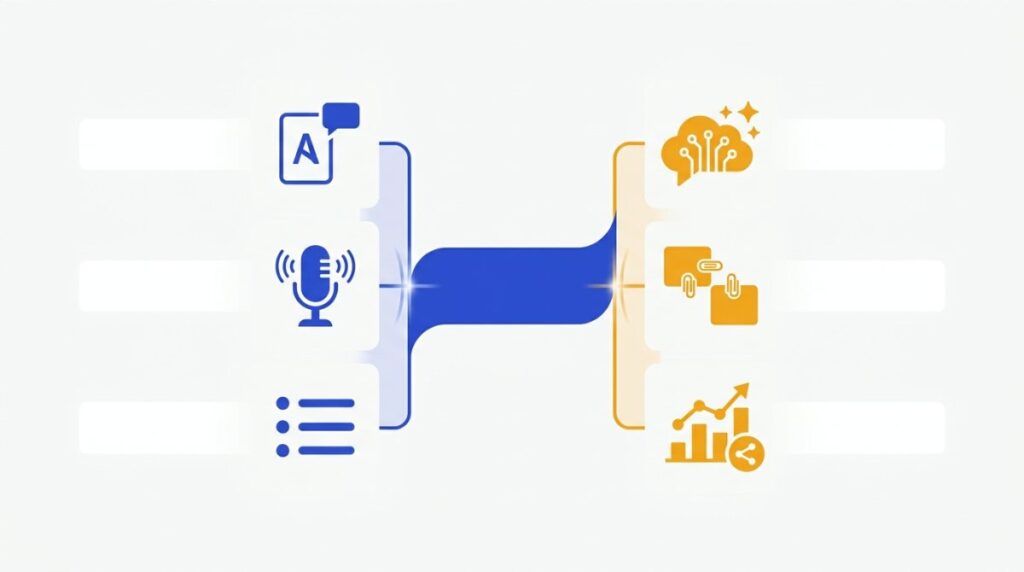
Evaluate either type of agency with the same five questions, because the work that earns direct answers and AI citations is largely the same work. The answers should be specific to your market, not a generic methodology slide.
- Which questions and prompts will you target? Expect a written set covering classic search queries and conversational AI prompts tied to buying intent.
- Which platforms will you track? Search result features and at least the main AI assistants your buyers actually use.
- What will you change off our website? A plan for reviews, listings, industry media and community presence signals real GEO capability.
- How will you report? Look for snippet and AI answer visibility side by side, repeated sampling and AI referral tracking in analytics.
- What will you not promise? Honest agencies say clearly that no one can guarantee a snippet or an AI citation.
For a longer vendor checklist, see how to choose a GEO agency, which lists the questions we would ask ourselves.
🔍 From Our GEO Playbook
Ask the agency to show one before-and-after page from its own site or a sample with details removed, then read only the first two sentences under each heading. If those sentences do not answer the heading on their own, the page is not ready for answer boxes or AI citations, whatever the agency calls itself.
Which one your business actually needs right now
Most businesses need a combined AEO and GEO scope, weighted by where their buyers ask questions. If your audience still relies on search results and voice queries for quick facts, AEO formatting carries more weight; if buyers use AI assistants to compare and shortlist providers, GEO work on entity and off-site signals becomes the priority.
A simple test helps. If your category is informational and fast-answer driven — definitions, how-tos, specifications — start with AEO formatting and structured data. If it is considered and comparison driven — choosing software, suppliers, agencies or high-value products — you need GEO from day one, because AI assistants are already building shortlists for your buyers.
🔍 From Our GEO Playbook
When budgets are tight, we sequence rather than choose: fix technical access and answer-first formatting on the ten pages that matter most, then add entity and off-site work. That order means the early AEO gains feed directly into GEO, instead of producing two separate projects that compete for the same resources.
If you would like a scope that covers both answer boxes and AI assistants, tell us about your market and priorities.

Frequently Asked Questions
Is AEO the same as GEO?
Not exactly, although they overlap heavily. AEO focuses on winning direct answers such as featured snippets, answer boxes and voice replies. GEO focuses on being mentioned, cited and recommended inside answers generated by AI models. Most of the foundation, including clear structure and technical access, serves both.
What does an AEO agency do?
An AEO agency restructures content so search engines and assistants can extract it as a direct answer. Typical work includes question-based headings, concise answer paragraphs, lists and tables, FAQ and HowTo structured data, and technical fixes that make pages easy to parse. The best AEO agencies now also track how the same questions are answered by AI assistants.
Do I need both an AEO agency and a GEO agency?
Usually not two separate agencies. Because the disciplines share most of their foundation, one partner with a combined scope avoids duplicated work and conflicting advice. What matters is that the scope covers answer formatting, entity clarity, off-site signals and measurement across both search features and AI platforms.
Is AEO outdated now that AI answers exist?
No. Direct answers still appear in search results, and the discipline behind them — clear, well-structured, answer-first content — is exactly what AI systems find easy to quote. AEO on its own is incomplete for AI visibility, but it remains a useful part of a broader GEO program.
How do I measure AEO and GEO results?
For AEO, track which target queries show your content in featured snippets or answer boxes. For GEO, sample your prompt set repeatedly across the AI platforms your buyers use and record mentions, citations and sentiment against competitors. In both cases, connect visibility to AI referral traffic and enquiries in your analytics.