Table of Contents
Engineers and procurement teams now ask AI assistants questions like “which suppliers make corrosion-resistant valves for offshore use” or “what certifications should a food-grade conveyor supplier hold”, so GEO for B2B and industrial companies is about one outcome: being the supplier those answers name, with your capabilities described correctly. Since 2017, AtalosWeb has helped companies build search visibility, and industrial markets are where we see the widest gap between what a company can actually do and what AI systems can find about it.
This guide explains how technical buyers research with AI, which on-site assets make your capabilities machine-readable, and which third-party sources — distributors, partners and trade publications — shape who gets recommended.
💡 Key Takeaways
- Publish technical specifications as crawlable HTML, not only as PDF datasheets or images, so AI systems can quote exact capabilities.
- Build application pages for each industry and use case you serve, answering the questions engineers ask before shortlisting.
- Make certifications and standards visible on dedicated pages with scope, issuing body and validity stated in text.
- Keep your company and product details consistent across distributor listings, partner directories and trade publications.
How Engineers and Procurement Teams Research With AI
Technical buyers use AI assistants to narrow the field before they contact anyone: to understand a problem, compare solution types, check which standards apply and list suppliers that fit. By the time a request for quote arrives, the shortlist is often already shaped.
Their prompts are specific. An engineer asks about materials, tolerances, operating temperatures or compatibility; a procurement manager asks about certifications, lead times, regions served and minimum order quantities. AI answers are assembled from supplier websites, datasheets, distributor catalogs, trade publications, standards bodies and industry forums.
If those sources describe you vaguely or not at all, the assistant recommends someone else. That is why our AI SEO and GEO agency services for industrial companies start with what engineers actually ask.
Why Technical Specs and Datasheets Must Be Crawlable
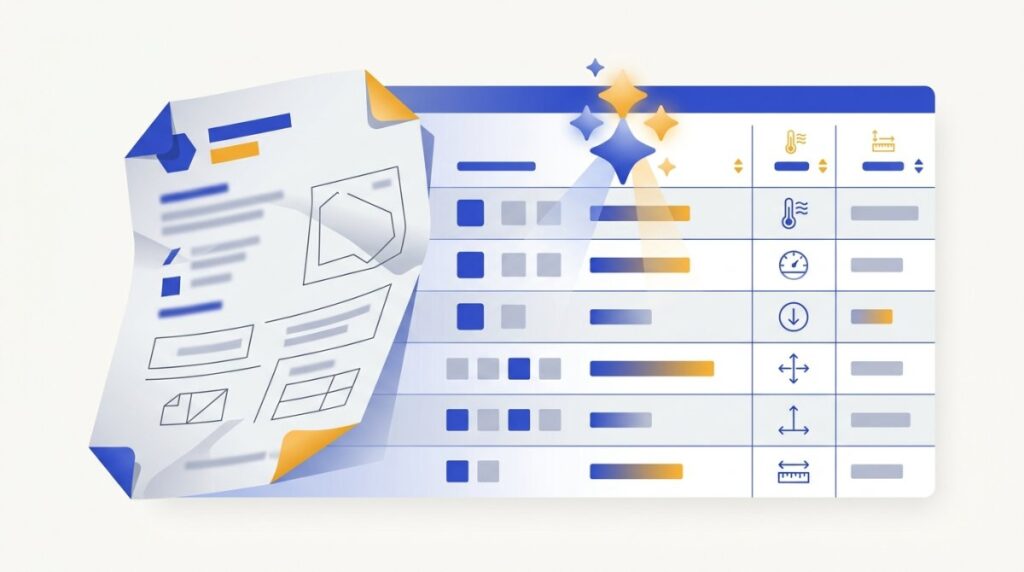
Technical specs must be crawlable because AI systems can only recommend capabilities they can read and verify. Specifications locked inside scanned PDFs, image tables or gated downloads are often invisible or unreliable to AI crawlers.
Practical steps that make technical content usable by AI:
- Publish each product’s key specifications in an HTML table on the product page, with units stated clearly.
- Keep the PDF datasheet as a download, but make sure it is text-based rather than scanned, and link it from an indexable page.
- Use consistent terminology across product pages, datasheets and catalogs, including the synonyms engineers actually use.
- Add Product structured data with identifiers, materials and key properties where they fit.
- Avoid gating basic specifications behind forms; gate detailed CAD files or configuration tools instead.
The same data-first logic applies in online retail, which we cover in GEO for eCommerce; industrial buyers simply ask for far more technical detail.
🔍 From Our GEO Playbook
Take your three most requested products and ask an AI assistant for their operating range, materials and compliance standards by name. Where the answer is wrong or missing, check whether that fact exists anywhere in plain text on your site. In industrial markets, poor AI visibility is very often caused not by weak content but by facts that exist only in a PDF catalog.
What Application Pages and Certifications Should Show
Application pages and certification pages answer the “is this supplier right for my situation” question that specs alone cannot. They connect what you make to the industries, environments and requirements your buyers describe in their prompts.
Application pages
Create a page for each industry and use case you serve: the problem, the operating conditions, which products or configurations fit, relevant standards and the questions engineers usually ask. Name environments specifically — food processing, marine, cleanroom, high-temperature — because those are the words that appear in prompts.
Certification and compliance pages
List each certification or standard with its scope, issuing body and which sites or product lines it covers. Put this in text on a dedicated page rather than only as badges in the footer. AI assistants answering procurement questions look for exactly this kind of verifiable detail.

Want to see which suppliers AI assistants name for your core products and applications, and where your company stands?
Where Distributors, Partners and Trade Media Fit In
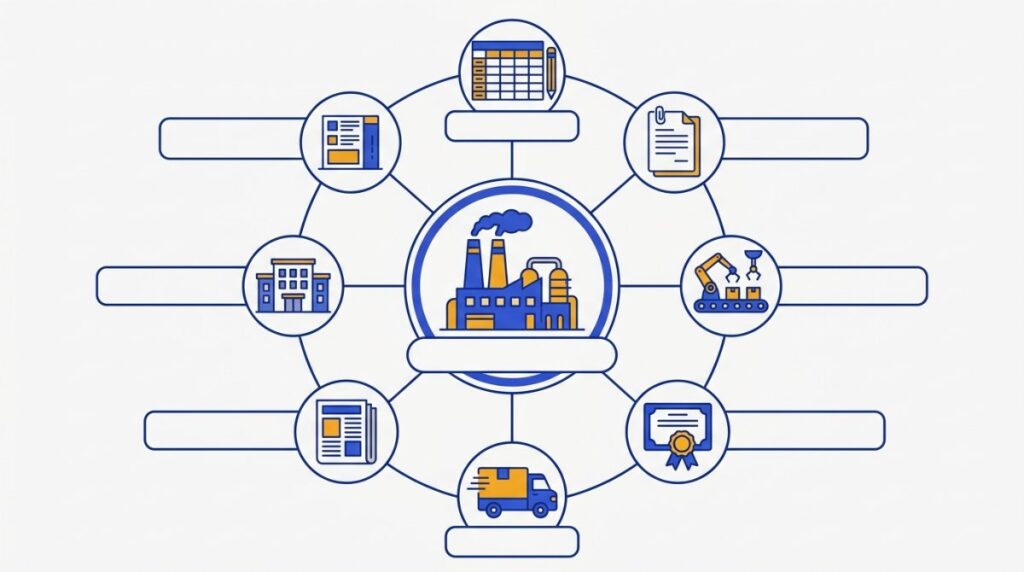
Distributors, partners and trade publications act as independent confirmation of what you make and who you serve. AI engines weigh these third-party sources heavily when deciding which suppliers to mention, because they corroborate your own claims.
Work through the sources in your market systematically. Make sure every distributor catalog and partner directory lists your products with current names, specifications and links. Contribute technical articles, application notes or expert commentary to trade publications, and keep profiles on industry supplier directories accurate. Participation in standards committees, industry associations and trade events also creates the kind of citable mentions AI systems trust.
For a wider view of how B2B GEO programs are structured, see our guide to AI search optimization services for B2B.
🔍 From Our GEO Playbook
Ask your top distributors for the exact product data they publish about you, then compare it with your own site. Discontinued part numbers, old company names and outdated specifications on distributor pages are a frequent reason AI assistants give engineers wrong information. A yearly data sync with key distributors is one of the highest-value GEO tasks in industrial markets.
B2B GEO Assets Compared: What Each One Does for AI
Each asset type plays a different role in whether AI assistants find, trust and recommend an industrial supplier. The table summarizes where to focus.
| Asset | Buyer question it answers | What makes it AI-ready |
|---|---|---|
| Product spec pages | Does this product meet my technical requirements? | Specs in HTML tables with units and consistent terms |
| Datasheets | Can I verify the details? | Text-based PDFs linked from indexable pages |
| Application pages | Is this supplier right for my industry or environment? | Named environments, standards and fitting products |
| Certification pages | Does the supplier meet compliance requirements? | Scope, issuing body and coverage stated in text |
| Distributor listings | Where can I buy it in my region? | Current names, specs and links to your site |
| Trade publications | Is this supplier credible in the industry? | Technical articles and expert commentary with your name |
| Company profile | Who is this supplier and where do they operate? | Consistent description, locations and capabilities everywhere |
How to Prioritize and Measure Industrial GEO Work
Prioritize industrial GEO by starting with the products and applications that drive the most valuable enquiries, then fixing the facts AI gets wrong about them. Measure progress through a prompt set of engineer-style and procurement-style questions, tested repeatedly, plus AI referral traffic and RFQs by landing page.
A sensible order is: crawlable specs and certifications first, then application pages for your priority industries, then distributor data alignment and trade media contributions. Long sales cycles mean the link between AI visibility and revenue takes time to appear, so track leading indicators such as correct descriptions, share of mentions and quality of inbound enquiries.
🔍 From Our GEO Playbook
Build your prompt set with your sales engineers, not your marketing team alone. Ask them for the exact questions prospects ask on first calls, including the awkward ones about limitations and compatibility. Those questions become both your tracking prompts and your content brief, and they tend to match what buyers type into AI assistants far better than keyword tools do.
If you would like a GEO plan built around your products, applications and distribution network, share your details with us.
Frequently Asked Questions
What is GEO for B2B companies?
GEO for B2B is the practice of getting a business-to-business company mentioned, cited and recommended in AI-generated answers. For industrial suppliers, that means making technical specs, applications and certifications easy for AI systems to find and verify. It also involves third-party sources such as distributors and trade publications that confirm your capabilities.
Do engineers really use AI assistants to find suppliers?
Many technical buyers now use AI assistants alongside search engines to understand problems, compare solution types and identify potential suppliers. The assistant rarely replaces supplier websites, but it often shapes which suppliers get visited. That is why being described accurately in AI answers matters before a buyer ever contacts you.
Should we remove PDF datasheets from our website?
No. Keep PDF datasheets, because engineers expect them. Make sure they are text-based rather than scanned, and publish the key specifications as HTML on the product page as well. That way both people and AI systems can access the information in the format that suits them.
How important are distributors for AI visibility?
Distributors can matter a great deal because their catalogs are often among the most detailed third-party sources about your products. If their listings are outdated or inconsistent with your site, AI assistants may repeat those errors. Regular data alignment with key distributors is a practical and often overlooked GEO task.
How long does GEO take for industrial companies?
Timelines depend on how much technical content already exists, how quickly your website can be updated and how many third-party sources need correcting. On-site fixes such as crawlable specs can be picked up relatively quickly by AI platforms that search the live web. Changes that depend on distributors and trade media usually take longer, so plan in quarters rather than weeks.